
32 available hardware and virtual editions - There's a version to fit every need.
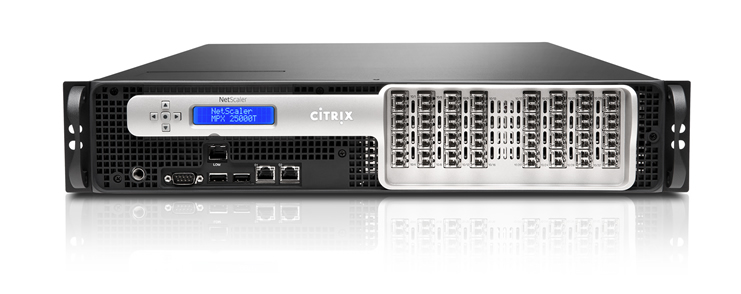
Trusted by the companies around the world, the Citrix NetScaler is the industry’s leading web and application delivery controller that maximizes the performance and availability of all applications and data, and also provides secure remote access to any application from any device type. If you deliver content over the Internet, you need a Netscaler.
Download: What is an Application Delivery Controller
NetScaler ADC load balances server workloads across multiple resources, monitors server health and responsiveness, and distributes traffic across multiple sites and clouds for disaster recovery. With new TriScale Technology, Citrix is enabling a genuine revolution for enterprise cloud networks by providing an unrivaled set of capabilities that smartly scale application and service delivery infrastructures affordably and with no additional complexity.
Download: Citrix Netscaler TriScale technology
NetScaler ADC recognizes Layer 4 through 7 attacks based on signatures or learned patterns, protects against distributed denial of service (DDoS) attacks, provides ratings for web site threats and safety, and enables PCI DSS compliance with ease.
Download: A powerful defense against denial of service attacks
Download: A foundation for next-generation datacenter security
For the third year in a row, ADC survey respondents like Apple, AT&T, Delta Airlines, Duke University, Ford Motor Company, J.P. Morgan-Chase, Siemens, Sony Pictures, Verizon and others choose Citrix as the leader in all six categories: Market, Performance, Reliability, Innovation, Price and Service & Support.
Download the full report and see for yourself!
Here are a few Netscaler case studies from organizations you'll quickly recognize...
Seattle Children’s Hospital goes mobile for the best patient outcomes
Arizona State University consolidates servers and improves reliability with XenServer and NetScaler
Fujitsu delivers the workplace of the future to transform a German state agency
Empire Education Group (EEG) optimizes application performance and security with Citrix NetScaler
Easynet boosts business development for e-merchants thanks to performance-oriented cloud platform
Royal Caribbean quickly consolidates global infrastructure with Citrix
Saint Francis Hospital and Medical Center deploys streamlined EMR system to thousands of workstations
We're ready to help you! Our initial consultations are always free, so reach out to us to learn more about what Cloud Leverage can do for you.